How Claude designed protein binders against scorpion neurotoxins
We asked an internal research Claude model to design minibinders (small proteins that attach tightly to a target) against scorpion neurotoxins.
47 posts
Works to understand the risks of AI models and develop ways to ensure future ones remain helpful, honest, and harmless.
25 posts
Studies and monitors the impact of AI systems on individuals, firms, and economies.
27 posts
Builds the infrastructure and systems that make Claude reliable and trustworthy.
33 posts
Stress-tests AI systems to understand the full extent of their current capabilities and anticipate what comes next.
35 posts
Studies how large language models work internally as a foundation for AI safety.
24 posts
Studies how AI affects people, both individually and collectively.
18 posts
Explores how AI can increase the pace of scientific progress through both research and collaborations.


Anthropic’s Economics team is sharing a new model of how AI may affect economic growth, jobs, wages, and more by 2030. The model lets you explore the scenarios, tell us what you think will happen, and see how your answers compare to +10,000 Americans.
Brice Ménard, an astrophysicist at Johns Hopkins University and a researcher at Anthropic, explains how he worked with Claude Science to produce the first complete map of the sky in UV light.
To see what works and what breaks when agents are sent into a market, we made a miniature market of Claudes.
203
ARTICLES
We asked an internal research Claude model to design minibinders (small proteins that attach tightly to a target) against scorpion neurotoxins.
We’re sharing two reports: the first covers how AI is changing employment inside Anthropic, and the second looks at the gap between how the public and Anthropic employees expect AI to affect work and the economy.
The decades-old mystery of the origins of one of the most popular cryptographic standards has been explained.
How has AI restructured work and employment at Anthropic? As a company at the frontier of AI adoption, Anthropic could be a leading indicator of how AI will shift work organization, hiring, and labor demand across the economy.

How will AI reshape the economy in the years ahead? What is the core source of disagreement about AI's future impact on the economy? This note presents new survey evidence on these questions.
We gave Claude plain-language specifications for eight quantum circuits, along with an automated evaluator to check and score its designs. Working largely on its own, Claude improved on the best published circuits, in some cases by an order of magnitude or more, which could bring practical quantum computers closer than previously anticipated.

As our merges per day grew more than tenfold, source control became our biggest development bottleneck. Here, we share how we migrated to an in-house version control system in five months.
Our experiments suggest that small AI models may be only months away from being capable enough to self-replicate on commercial IoT devices, like Android TVs and smart ovens.
This report describes examples of unintended model actions we’ve observed during evaluations and internal use of Claude.
Brice Ménard, an astrophysicist at Johns Hopkins University and a researcher at Anthropic, explains how he worked with Claude Science to produce the first complete map of the sky in UV light.
We’re making available OSS Scanner, an opt-in vulnerability scanner for the open-source ecosystem that’s informed by our experience using Claude to find vulnerabilities during Project Glasswing.
Guest author Prof. Matthew Schwartz describes what happened when he stopped fighting Claude and allowed Claude to find “Claude-shaped” problems: ones best suited to the capabilities of the current generation of LLM tools. This led him to build BootLoops, a toolkit for exact calculations in quantitative science, which he has been applying across scientific fields alongside experts.
We built an index of how well today’s robots can perform US job tasks. Robots can already do three-quarters of physical tasks, mostly in limited settings, but are cost-competitive for just 0.3% of them.
We’re launching a new study using Anthropic Interviewer to learn from your experiences with AI.
Like Claude Mythos Preview, GLM-5.3 has strong capabilities for autonomously building end-to-end cyber exploits. But GLM-5.3 is unlike other frontier models in that it has been released without meaningful safeguards to limit misuse.
Guest writer and physicist Matt von Hippel shares what happened when he issued a challenge to AI companies to solve a problem in his former subfield of theoretical physics.
To see what works and what breaks when agents are sent into a market, we made a miniature market of Claudes.
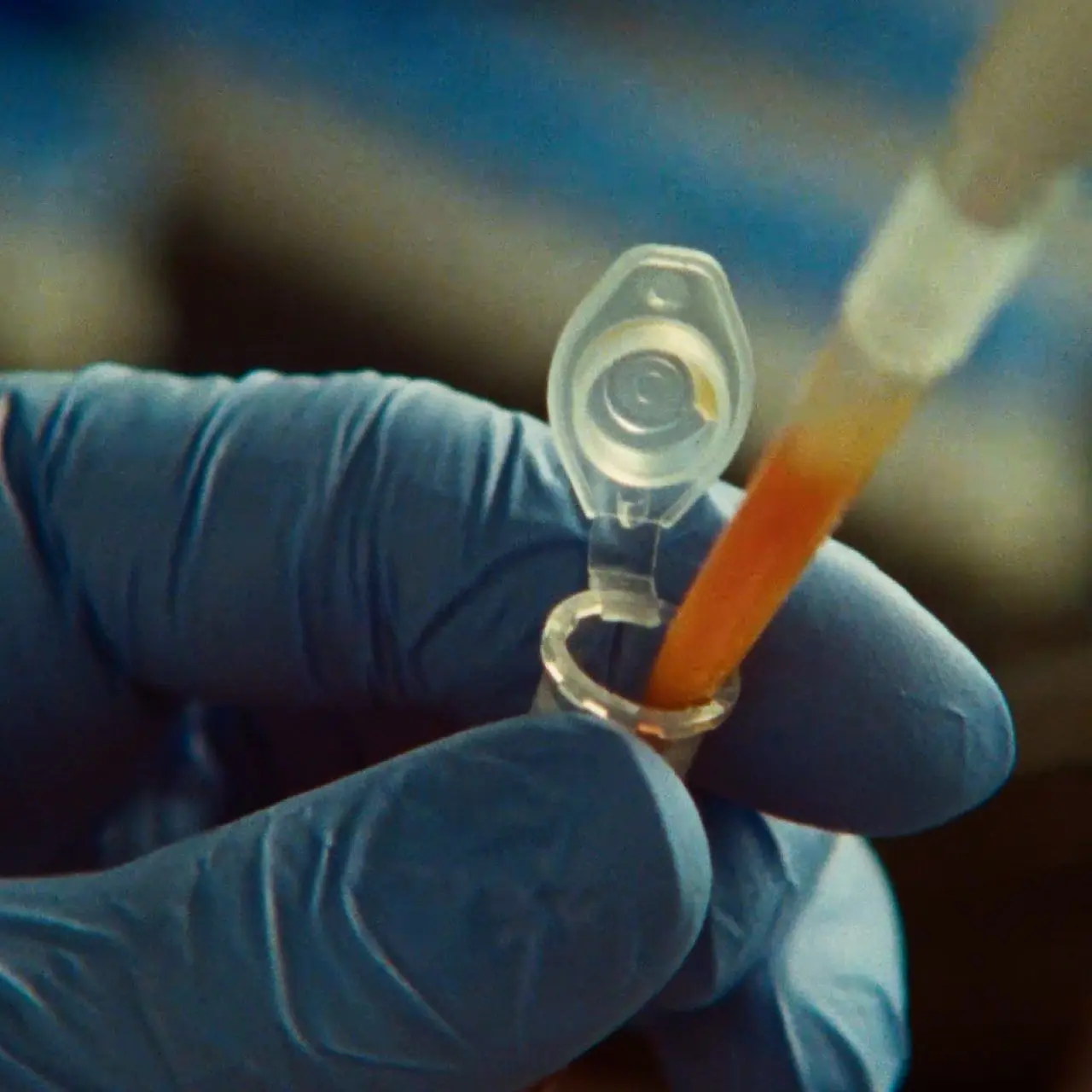
We’re announcing a new life sciences research group and laboratory at Anthropic. This post introduces the team behind this work and shares early results in which Claude discovered a novel enzyme system with properties reminiscent of CRISPR.

Anthropic is sharing new measurements that would give the public visibility into frontier AI development.
Claude made the open-source models that scientists use to predict and design biomolecules faster and more memory-efficient. Claude optimized more than 30 of these models in just under four weeks, speeding them up roughly 4x on average. It also created a low-memory mode that enables the accurate prediction of biomolecular systems larger than 10,000 tokens (amino acids, nucleotides, and atoms from small molecules and ions) on a single NVIDIA GPU node.
Anthropic’s Frontier Red Team developed new evaluations to measure AI capabilities in tactical intelligence targeting and conventional weapons development.
Anthropic’s Economics team is sharing a new model of how AI may affect economic growth, jobs, wages, and more by 2030. The model lets you explore the scenarios, tell us what you think will happen, and see how your answers compare to +10,000 Americans.
We present an alignment assessment of four incidents in which Claude models gained unauthorized access to real third-party systems.
We are sharing the first complete computer-checked proof of Fermat’s Last Theorem. Claude worked largely autonomously over 11 days to write the proof in the Lean programming language.